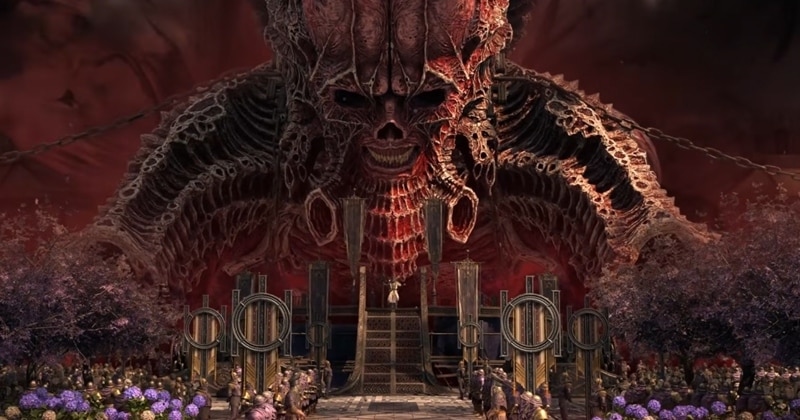
Path of Exile 2’s upcoming 1.0 update puts loot, character progression, and skill combinations under renewed scrutiny. The full release is scheduled for December 11, 2026, bringing the completed campaign, the Shadow, and the Conquerors of Wraeclast league. Alongside that content, the latest development plans address several persistent concerns: disappointing item drops, restrictive early Support Gem choices, uneven skill balance, and the demands of combo combat.
Some changes have a clear direction. Others remain proposals, with final values and implementation details still unsettled. That distinction matters for players preparing a league starter or deciding which existing build to revisit.
Conquerors of Wraeclast Adds Guaranteed Campaign Rewards
The Conquerors of Wraeclast league is designed to reward players throughout the campaign. Each area will contain supplies that drop guaranteed rewards when destroyed. Their defenses will vary, from ordinary monster packs to rare enemies, while additional league encounters will give different zones their own reward opportunities.
The league also ties campaign progression into a larger conflict involving armies, castles, and rival factions. Its endgame storyline extends onto the Atlas, where territorial warfare becomes a central activity.
Faction selection applies across an account’s characters within the same league. Players cannot place separate characters into opposing factions while retaining independent allegiances. Changing faction changes that allegiance for every affected character because castle ownership is shared.
Loot Protection Targets the Worst Drops
Path of Exile 2’s item system has changed substantially since Early Access began. The original approach produced fewer satisfying rewards than players expected, prompting revisions to loot availability and Unique item power.
A major part of that work involves protection against unusually poor outcomes. Rare monsters have minimum reward safeguards, and Unique monsters have their own protection systems. The purpose is to reduce encounters that feel unrewarding without relying entirely on broad increases to drop rates.
Item generation also includes relationships between certain modifiers. An elemental modifier can increase the likelihood of related elemental modifiers appearing, while some elemental implicit modifiers influence that process as well. These relationships encourage more coherent items, although they do not guarantee a useful result on every roll.
For players managing crafting resources, the practical question remains whether an item has a strong enough foundation to justify further investment. Searches for “buy Path of Exile 2 Currency” often focus on acquiring resources, but understanding item bases and compatible modifiers is equally relevant to planning an upgrade.
Unique Items Should Feel Powerful During the Campaign
The Unique item redesign addresses a weakness in early progression: too many low-level Uniques functioned mainly as components for specialized endgame builds.
The revised goal gives campaign drops more immediate appeal. Finding a Unique should create a reason to equip it, experiment with a skill, or start considering a different character. Useful leveling items and elaborate endgame interactions both have a place in that approach.
That does not mean every low-level Unique is intended to remain the strongest option indefinitely. The aim is to make discoveries exciting at the point they appear while retaining items with lasting build possibilities.
Support Gem Recutting Is Planned, With Early Scarcity Retained
A proposed Support Gem recutting system will let players correct earlier selections. The Hooded One is the intended candidate for providing that service, though its final implementation remains unsettled.
Early Support Gem scarcity is still deliberate. Supports represent meaningful increases in character strength, and deciding which skill receives one is part of campaign progression. Recutting is intended to soften mistakes without removing those decisions.
Recommended Support Gems also need to give clearer guidance. A recommendation should help a new player assemble a functioning skill setup, especially while resources remain limited.
The design standard separates a weak skill from a nonfunctional one. A skill that improves with a rare or high-tier support fits progression goals; a skill that cannot operate properly without that support signals a problem.
Poison Changes End Repeated Gas Cloud Stacking
Poison is receiving one of the most consequential mechanical changes discussed for PoE 2 1.0. Gaseous Poison will count as a form of Necrotic Poison, with only one Gaseous Poison effect affecting a monster at a time.
That restriction directly affects Gas Arrow and Gas Grenade builds that depend on overlapping poison clouds. Repeatedly placing clouds on one target will no longer provide the same stacking approach.
The intended rotation combines several actions: apply Poison, convert it into Necrotic Poison through another mechanic, introduce a gas cloud, and use an explosion when appropriate. This gives different skills distinct jobs within the same damage sequence.
A longer base Poison duration is also planned, with approximately six seconds discussed instead of two. That number remains provisional. Longer durations are intended to leave enough time for players to perform the other actions in a combination.
Bleeding Moves Toward Dedicated Skills
Damaging ailments are being pushed toward more deliberate application. The general Bleed Support is being removed, encouraging players to use skills designed around Bleeding instead of adding the ailment to any attack with a large initial hit.
Hammer of the Gods illustrates the concern: an exceptionally powerful hit can become the foundation for an ailment build without requiring much commitment to an ailment-specific toolkit.
Conditional ailment supports are part of the revised approach. Their requirements give developers more control over how Bleeding and other effects enter a build.
Fire damage remains an area for further work, particularly around Flammability. A broader Chaos damage redesign has also been reduced in scope for 1.0, leaving additional changes for later development. These discussions do not establish a complete launch rework for every ailment.
Shadow Stealth Is Built Around Movement and Ambushes
The Shadow combines daggers, traps, and Stealth. Shroud requires a dagger and serves as a movement tool, allowing players to reposition and prepare their next attack. The intended pace involves repeated ambushes, with kills helping the character return to Stealth and continue fighting.
This makes Stealth relevant beyond quiet campaign encounters. Moving between monster packs becomes part of its purpose, rather than requiring players to remain outside combat for extended periods.
Eclipse supports a further interaction by making attacks count as attacks from Stealth for a limited duration. Future items and character options remain possible, but an Ascendancy that automatically handles entering Stealth has not been confirmed.
Traps are classified as Attacks, and the stated intention is that they should be able to Leech. Players planning around that interaction still need to examine individual skill restrictions and final descriptions.
Combo Combat Will Gain Tools to Reduce Repetition
Multi-skill combat remains central to Path of Exile 2’s direction. The design challenge is keeping combinations engaging when players repeat them across entire maps.
Later progression is expected to provide Support Gems and other tools that reduce some execution requirements. Duelist stance interactions are one area where that distinction matters: learning a combination during the campaign differs from repeating its full setup against every ordinary monster pack.
Movement improvements follow a class’s needs. The Warrior is a particular concern because melee characters need reliable access to enemies and room to respond to danger.
Older skills also face a larger balance backlog. Some need changes to their behavior in endgame combat, requiring programming work beyond numerical damage increases. Completing the campaign and improving Uniques have competed for those development resources.
Ascendancy Identity Remains a Priority
Ascendancy-exclusive mechanics are intended to stay exclusive. Moving those mechanics onto general equipment is outside the current direction, while older Ascendancies are candidates for more distinctive mechanics over time.
Branch structure is also under consideration. A defensive node with a substantial drawback can make its follow-up feel compulsory, limiting practical choices. Future reviews will pay more attention to whether partial investment supports a viable build.
Weapon Set Passive Skill Points are allowed to be powerful. Their value alone is not viewed as a reason to reduce them; the passive tree still needs to present interesting decisions.
Divination Cards and Other Features Remain Beyond Launch
Divination Cards were considered for 1.0 and removed from its scope to reduce development pressure. They remain planned for the future, while a related gambling system has no confirmed implementation.
Claws are another feature without a near-term commitment. Their introduction raises a weapon-identity problem because they currently lack a clear place within the planned class toolkits.
Rare monster modifiers and Strongboxes also need further development. For players preparing a PoE 2 league starter, the most immediate build checks are the new gas-cloud restriction, dedicated ailment application, Support Gem availability, and the requirements of the revised skill combinations.